Library Update - BOOK SWAP

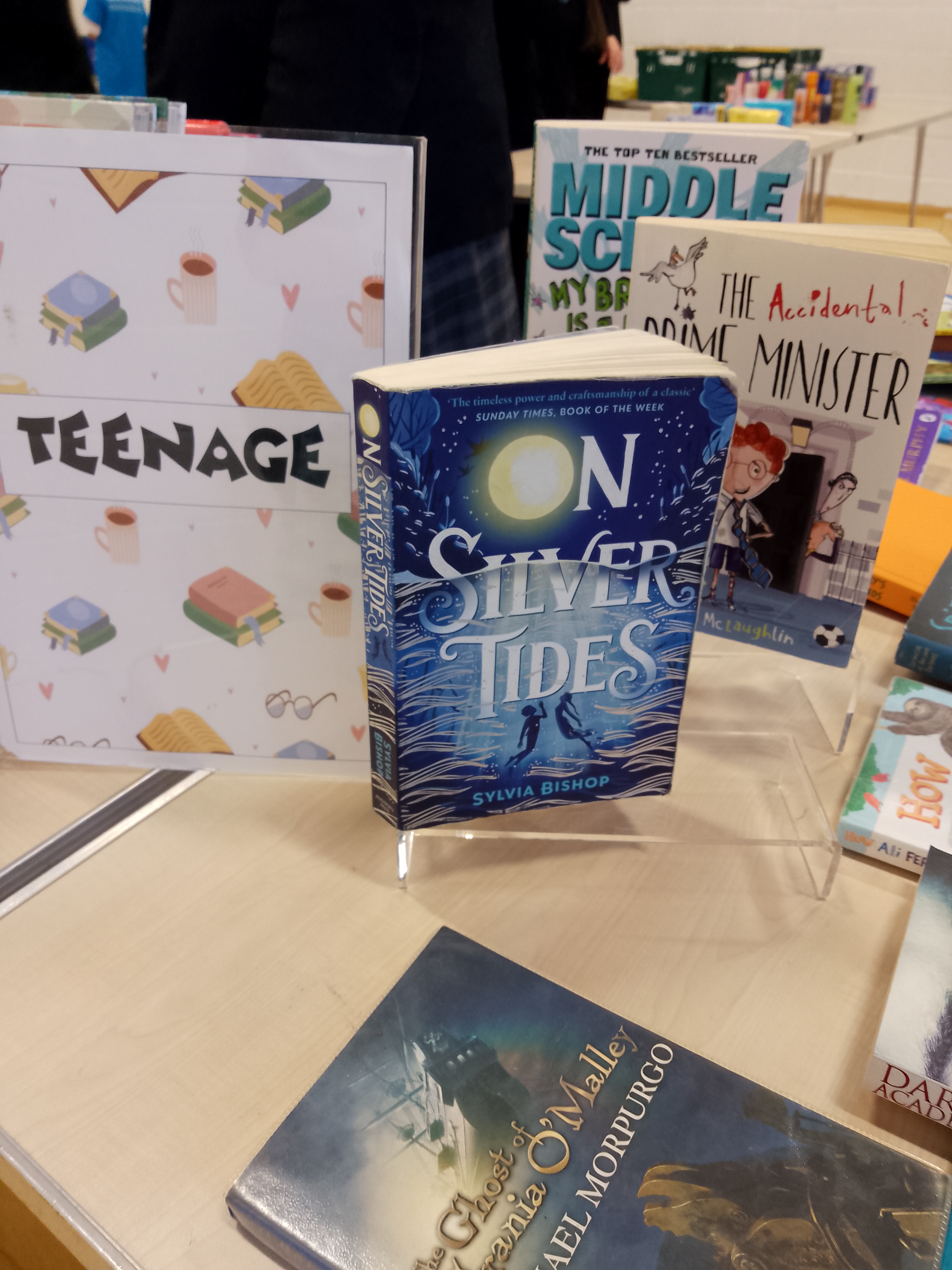
As part of the library, we have spread our wings to join UK Harvest and provide a book service to the community every month in the Pheonix Centre. The library is represented by the wonderful Regis School Literacy Ambassadors who volunteer their time to help the librarians set up, promote and guide people to donate and receive free books within the community. The aim is to promote reading for pleasure and that everyone can have access to free, good quality reading material. The Book Swap has taken in book donations from The Regis School students and staff, Southways Primary School and Stepping Stones Nursey as well as the general public.
So, Please join us next month on the 5th June - bring a book, swap a book. It's an unending circle of reading!
The Library Team
Library Update - Summer Term
APRIL

Hello Theatrical Readers,
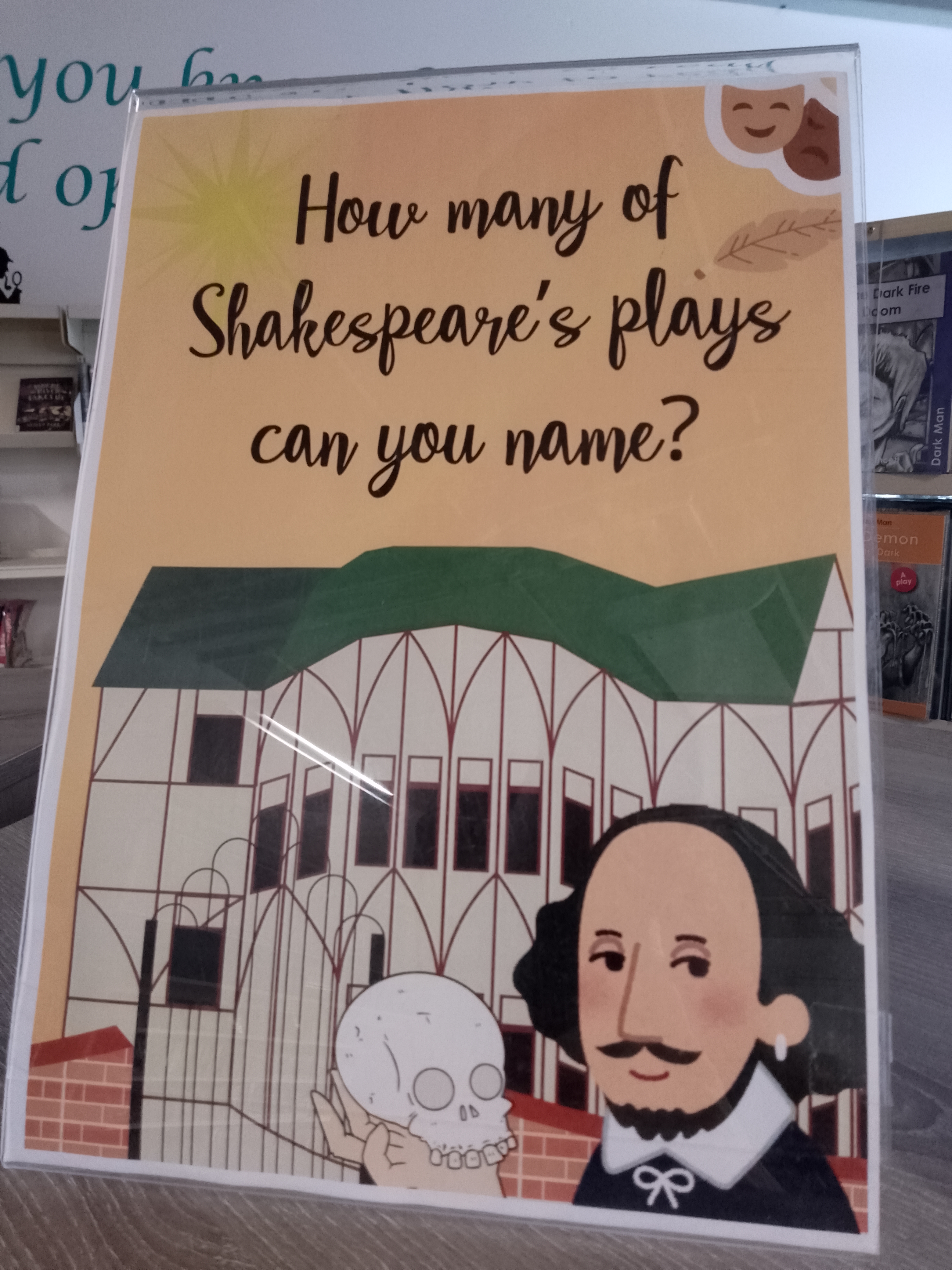
This month the library has been celebrating all things Shakespearian, as the 23rd is not only the bard's birthday, and his death month, but also world Shakespeare Day. Throughout the UK every school attending child has some form of encounter with Shakespeare, be that by studying his plays, seeing his plays or reading at least one sonnet. That's because the effect William Shakespeare has had on the English language is profound. Due to Shakespeare, we have over 1,700 words and phrases that are still in use today that he 'invented' and set into the English language and culture. He created phrases like 'in a bit of a pickle' , 'brave new world' or 'all that glitter's isn't gold' and words like 'bedazzled', 'gossip' and 'lonely'. Yes, without Shakespeare there would be big holes, even in our modern language.
Not to mention where we would be without his great dramatic tragedies like 'Romeo and Juliet' or 'Macbeth' that laid the foundation for romantic tragedies and murder plots throughout the ages as writer after writer re-fashioned his tried and tested tropes. One of his most lasting appeals is that Shakespeare did not put in place strict guidelines as to how his plays were to be produced, acted or presented and because of this foresight he and they have endured centuries of change. No production of a Shakespeare play is the same, each one is a new adventure and interpretation into the observations of mankind, their hearts and minds within. It's a tribute to his scribblings that you can love a story and also fall in love with its many varied versions.
As a tribute to this fluctuation of Shakespeare's words and ideas the library will be displaying several modern adaptations of Shakespeare's beloved stories, as well as several games and competitions throughout the month, culminating on the 23rd April - Shakespeare Day! So, come and view our selection of plays in the library and the modern fictions that have been inspired by Shakespeare's timeless tales, take part in a competition and mayhaps win a sweet treat.
In the words of the great man himself, 'parting is such sweet sorrow', we hope to see you 'tomorrow, and tomorrow and tomorrow' in the library.
The Librarians.
Library Update - Spring Term
MARCH


Greetings Bookish Readers,
In the library with all things being, as usual, book orientated, and the month of March containing World Book Day, we thought we'd take a look at the world events taking place and there is a current sweep of certain books being banned. Many librarians are being asked globally to cull their collections and remove books that are being deemed as challenging. Here in the library, we've been asking ourselves - should we read banned books?
First, we needed to discover what deems a book ban-able?
These are books that are often considered difficult or uncomfortable in their subject matter or language for some people in society. These books and stories can often represent people who are marginalised in society or 'othered' in some form. Banning, challenging or censoring these types of books, (or any books for that matter), infringes on people's rights and freedom of speech and print. In the UK, freedom of expression is a fundamental right protected under the Human Rights Act 1998 by Article 10 of the European Convention on Human Rights. Article 10 extends to the expression of views that may shock, disturb or offend the deeply held beliefs of others; and yet it is nonetheless a criminal offence to stir up hatred on sexual orientation, racial and religious grounds. Offensive or insulting language may also constitute harassment, under the Equality Act 2010. This freedom of expression applies to everyone and means that people are generally free to talk about or write about or otherwise express their ideas and opinions without any censorship or interference from the state, subject only to narrow exceptions: for example incitement to violence or hate, threats to national security and protection from harmful or unsuitable acts, words and images; which we can all agree is nasty behaviour.
Controversial books have often been thought provoking, challenging and have tested the boundaries of societal acceptance whilst provoking heated debates amongst readers and scholars alike. So, it is sometimes very hard to draw a distinctive line. Thankfully the UK has banned very few books in its time, and many of those that were became released from their bond's years later, into a newer more modern and liberating society.
Democracy depends on people being free to express, debate and criticise opposing viewpoints. For this reason, it is vital that as librarians we take everything into consideration and view the library collection with a careful eye to make sure that young and vulnerable minds are not disturbed or corrupted by what is on the shelves. You may have noticed that there are coloured dots on some of our books, which are placed on separate shelves. These are because we have deemed these books as unsuitable for those below year 9, and to view them, if you are below that year, you will need a permission slip signed by your parents. This is for students own protection, and the books are vetted, chosen and discussed by the librarians for suitable content to keep students safe.
Libraries have a duty to make sure that books are containers of knowledge and by declaring that some books are dangerous is a form of public protection, but some libraries can take it too far and impose their own political or religious views upon the bookshelves. Currently in America books are being taken off the shelves because they discuss racial issues, religious beliefs, political values or gender issues that are considered controversial to some. However, here in the UK and this library we feel that reading about a wide and varied variety of lived experiences of many different types of peoples only serves to build compassion, respect, tolerance and understanding within human beings. Banned books are often written by marginalised people whose stories we desperately need to amplify. As the Spanish philosopher George Santayana said, ' Those who do not learn from history are doomed to repeat it'.
As we have seen from the displays in the library these past few months, books are vessels for preserving history in diaries, first hand witness accounts, biographies, factual and fictional depictions in narratives and stories. Books are people's lives and the retelling of their stories. They have incredible power to challenge social norms, ignite imaginations and inspire change. So why not visit the library and explore our fountains of carefully preserved knowledge amongst the shelves.
Speaking of world books, this month in the library, we have been celebrating World Book Day 2026, which began on Thursday 5 March, and we extended with the Book Fair until the 12th March, so students could redeem their book tokens. There has also been a competition running to write a story with only six words. This event is an annual celebration of authors, illustrators, books and of course the joy of reading. It is one of the highlights of the year, presenting another opportunity to join in with the international buzz around reading and the commemoration of books. A time to encourage everyone to let go of pressures and expectations and to grow a lifelong love of reading. World Book Day provides a fantastic opportunity to focus on reading for pleasure, which supports student's autonomy in book choice, and hopefully helps to embed a love of books that brings life long joy.
World Book day also coincides with the end of both our Book Competitions running in the library: Chichester Literature Quiz and The Utterly Lit Awards.
Happy free expressive reading and don't forget to use your World Book Day book tokens!
The Librarians
Library Termly Update - Autumn Term
DECEMBER


Warm Winter Wishes Readers,
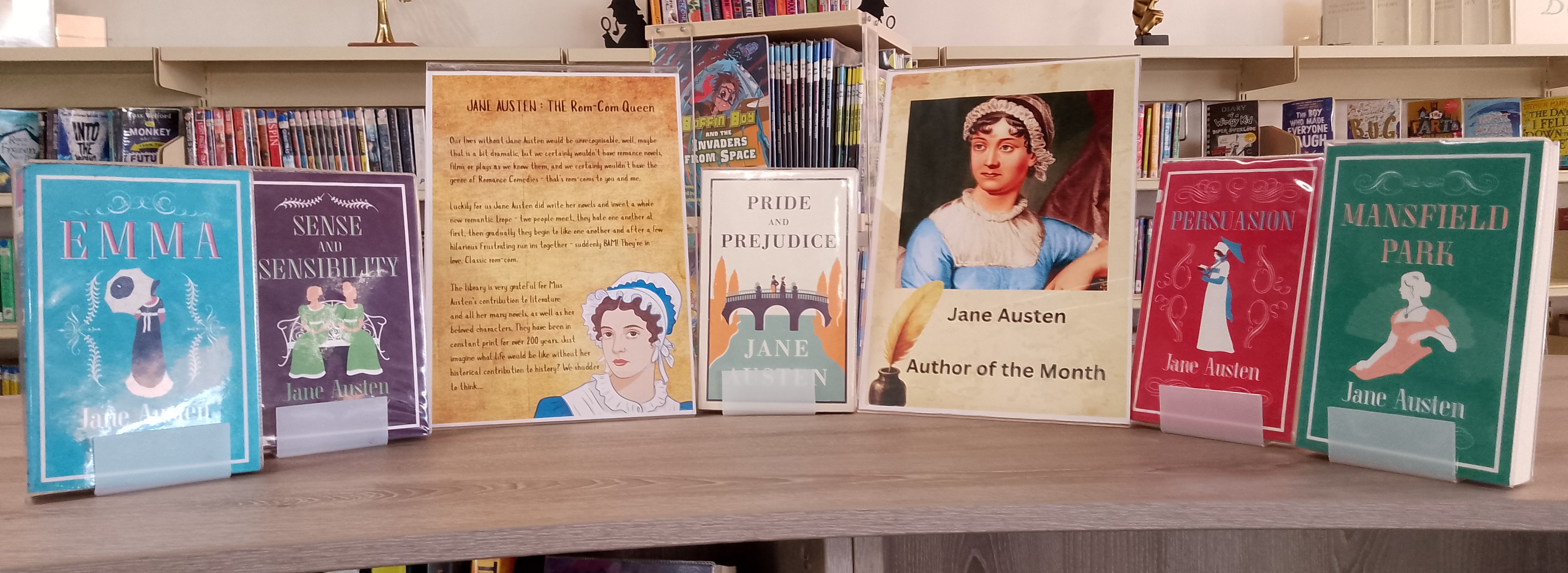
It's a significant month in the literary world this December, as it marks the 250th anniversary of Jane Austen's birth (1775-1817). Jane only lived to be a mere forty-one years of age, but in that time, she broke the mould and created a new genre - Romantic Comedies. That's rom coms to you and me. Which is why we have chosen Jane Austen as the Author of the Month.
Here at the library we have been pondering on the possibility of our lives without Jane Austen.
It's been over 200 years since a new Jane Austen novel was written, but they're still as popular as ever. They are in continuous publication around the globe and every year she attracts new fans. Luckily for us her stories and characters have continued on to live long and fruitful lives. Every one of her novels have been translated into a play and a film and she is still voted as one of our greatest literary heroes of these fair isles.
But what would life be like without the benefit of Jane Austen in it?
Would we all still be readers, well of course we would, but we would have had rom-coms? Probably not. Would we have had female authors? Well, Jane did help break the social mindset that women could actually write, and that fictional 'romance' novels weren't dangerous for the female mind. So, perhaps it would have taken longer, who knows what ripples we make in time.
We would perhaps have a different view of marriage and the choosing of a life partner. Jane Austen showed the world that not all marriages were doomed to be unhappy or love less financial business transactions - she brought the world the idea that love and romance could be a harmonious match made in heaven and that people should hold out for that ideal.
Yet, it's the structure of her novels that makes Jane so influential. She revolutionised the novel format by including the use of free indirect discourse. This narrative technique allows readers to experience a character's thoughts and feelings, all while maintaining an objective omnipotent viewpoint. In short, she created the intimate readers experience where we get to be in the thick of the gossip; no doubt, just like Jane was back in her day. This writing technique has influenced countless writers and completely shaped the trajectory of modern-day fiction books.
Austen's works also included a range of social classes, and she helped to portray strong driven independent ( to a point) female characters, the like of which had never been seen before in writing. That is because she boldly wrote from a unique female point of view and explored the boundaries of gender roles of her time. Her female characters challenged the social norms of the time, laying down a feminist blueprint for years to come.
Once you get used to the ways of Austen you will find her works incredibly witty and humorous. She is just as full of observational humour as her acerbic male counterpart, Oscar Wilde. This cultural viewing window on to a society and way of life that is no longer present is another of her appeals. Austen gave us a peak behind the closed doors and inside the ballrooms of Regency society. This behind the curtain cultural reveal has never lost its appeal.
In truth, we cannot measure the extent of Jane Austen's influence on literature and society, it is too vast and too multifaceted. What we do know, is that her works continue to inspire and resonate with readers and writers alike in every new generation, solidifying her place as a pivotal figure in literary history. So, we hope you'll be adventurous this month and pick up one of her novels, or perhaps a rom-com inspired by her trope and dip your toe into the Regency world of gossip, romance and true love.
Upon the library shelves we have all of Jane's novels, as well as stories directly inspired by and sometimes continuations of her narratives, such as 'Jane Austen Stole my Boyfriend', by Cora Harrison, as well as hundreds of romance pastiche novels which imitate and parody her works. So why not pop into the library and learn more about Miss Austen and her rom-com world that has literally influenced probably every romance novel, film or tv show you've ever watched, read or encountered.
Of course, in the library we always have a wide and varied selection of Christmas themed stories for those wanting to embrace the season like a pair of cosy woolly socks. Some new seasonal authors will be on display as well as the national treasure Charles Dickens and his beloved 'A Christmas Carol'. So, come and check out some fun Christmas spirit from the library and keep those seasonal bah humbugs at bay. Our selected book of the month is 'A Boy Called Christmas', by Matt Haig, which coincidentally is showing as this year's Christmas Highlight at Chichester Festival Theatre. Matt Haig's speculative fiction stories transport readers to alternative realities and faraway lands. So, grab a hot chocolate and snuggle down with a cosy book this Winter term, there's always a diverse and inviting selection on the library shelves; and as Jane Austen once wrote, 'I declare after all there is no enjoyment like reading!'
Happy sighing,
The Librarians.
NOVEMBER
Remembrance Greetings Readers,
Our author of the month is Michael Morpurgo. Morpurgo is an English author, poet and playwright, who is known best for children's novels such as War Horse (1982). Hailed as a 'magical storyteller', he uses recurring themes such as the triumph of an outsider or survival, for characters' relationships with nature, and for vivid settings such as the trenches of the First World War. Morpurgo was Children's Laureate, from 2003 to 2005, and is President of Book Trust, a children's reading charity. The library chose Morpurgo, not just because he is a fantastic author and we love reading his books, but because he ties in neatly with the big theme of November.
November is the month for remembering and honouring those who fought for our freedoms in the Great Wars, and 2025 has had some pretty monumental 80th anniversaries. Perhaps you were able to attend some of them this year or caught some of them in the news. Our library display attempts to capture the essence of this meaningful anniversary.
The year 1945 saw the end of World War II and 2025 saw the 80th anniversary of that ending. In 1945 the world also saw the 80th anniversary of the bombing of Dresden, the Battle of Iwo Jima, the liberation of the concentration camp - Bergen-Belsen, The Battle of Okinawa, the atomic bombing of Hiroshima and Nagasaki, VJ Day and VE Day and the Nuremberg Trials to name but a few momentous occasions in world history. Monumental historic events that re-shaped the world and therefore our lives in its wake. So, this year's Red Poppy Remembrance Day is a very important event.
These significant anniversaries serve as poignant reminders of the brave sacrifices made and the valuable lessons learnt during World War II, which we should never forget. As we commemorate these historic events throughout 2025, it is essential to reflect on their historical significance in our turbulent world today, which is why here in the library we have such a large range of books on this important era. Our shelves are bursting full of books that cover every aspect of the Second World War, from far flung places to the Battle of Britain on the home front. From exciting narratives, heart wrenching facts, daring diaries, awe inspiring fiction, brave biographies and touching autobiographies: here in the library, we have a story for every event.
Happy Reading,
The Librarians.